Six-inch recessed lights offer the sweet spot between broad illumination and ceiling real estate. They’re the workhorse of residential lighting, bright enough to serve as primary light sources in kitchens and living rooms, yet versatile enough for accent lighting in hallways and bedrooms. Unlike their smaller 4-inch cousins, which often feel inadequate in rooms with ceilings over 8 feet, or bulky 8-inch fixtures that can overwhelm smaller spaces, the 6-inch diameter provides balanced coverage for most residential applications. This guide walks through everything a homeowner or DIYer needs to know about selecting, spacing, and installing these fixtures correctly.
Table of Contents
ToggleKey Takeaways
- 6 inch recessed lighting delivers balanced illumination for most residential spaces, providing adequate coverage for rooms up to 150-200 square feet while avoiding the limitations of smaller 4-inch fixtures or bulkier 8-inch alternatives.
- When selecting 6 inch recessed lights, prioritize ceiling height and available clearance, choosing IC-rated housings for insulated ceilings and ensuring proper spacing of approximately 4 feet on center for even coverage.
- Modern LED-compatible 6 inch recessed lighting fixtures offer superior energy efficiency, lower operating costs, and flexibility with directional trims, dimmable options, and color temperature choices tailored to each room’s function.
- Installation success depends on understanding housing types (new construction vs. remodel housings) and electrical requirements, with new construction options being more affordable and secure when framing is accessible.
- Invest in quality 6 inch recessed lighting with ENERGY STAR® certification, high CRI ratings (90+), and long warranties to ensure natural color rendering and durability while reducing long-term energy expenses.
What Is 6 Inch Recessed Lighting and Why Choose This Size?
A 6 inch recessed light (sometimes called a can light or downlight) refers to the diameter of the fixture’s trim opening, the visible ring that sits flush with the ceiling. The actual housing can that mounts above the ceiling is typically larger, around 7 to 8 inches in diameter, to accommodate the electrical components and heat dissipation.
This size became the residential standard for good reason. It delivers enough lumen output to function as general lighting in spaces up to 150-200 square feet when properly spaced. Most 6-inch fixtures accommodate bulbs ranging from BR30 to BR40 format, or integrated LED modules producing 650 to 1,200 lumens per fixture.
The choice often comes down to ceiling height and room function. For standard 8-foot ceilings, 6-inch lights provide adequate spread without creating harsh shadows. They also work well in 9 to 10-foot ceilings when paired with appropriate beam angles. Smaller 4-inch lights work better for accent or task lighting, while larger sizes are typically reserved for commercial spaces or great rooms with vaulted ceilings.
Key Benefits of 6 Inch Recessed Lights
Versatility tops the list. Six-inch fixtures handle both ambient and task lighting duties. A kitchen island might use them for focused work light, while the same fixtures in a family room provide general illumination without visible hardware cluttering the ceiling plane.
Higher lumen capacity compared to smaller cans means fewer fixtures are needed to achieve proper light levels. This reduces installation labor and cumulative electrical load. Most quality 6-inch LED retrofit kits or integrated units now deliver 800 to 1,000 lumens while drawing only 10-15 watts.
Compatibility with insulation is another practical advantage. Modern IC-rated (insulation contact) 6-inch housings allow direct contact with blown-in or batt insulation without creating fire hazards, maintaining the thermal envelope in conditioned spaces. Non-IC housings require a 3-inch clearance from insulation, which can create energy loss in attics.
Finally, the trim and bulb options available for 6-inch fixtures far exceed those for other sizes. Homeowners can choose from baffle trims that reduce glare, open trims for maximum light output, adjustable gimbal trims for directional lighting, or even shower-rated trims for wet locations.
Types of 6 Inch Recessed Lighting Fixtures
The housing type determines installation method, cost, and long-term flexibility. Understanding the difference prevents buying the wrong product for a project.
New Construction vs. Remodel Housing
New construction housings (sometimes called “new work” cans) are designed for installation before drywall goes up. They feature adjustable metal bars that nail or screw directly to ceiling joists, typically spanning 14 to 24 inches between framing members. These are the most affordable option, often $8 to $15 per housing, and provide the most secure mounting. They’re ideal when framing is exposed during additions, major renovations, or new builds.
Remodel housings (or “old work” cans) install through a hole cut in existing drywall. They use spring-loaded clips or toggle-style brackets that grip the drywall from above, requiring no access to joists. The tradeoff is cost, remodel cans typically run $15 to $30 each, and slightly less structural stability. Most include an integrated junction box, while new construction types often require a separate box mounted to framing.
A third option gaining popularity is integrated LED downlights. These ultra-thin units (often just 1 to 2 inches deep) combine housing, driver, and light source in one assembly. They work in tight ceiling cavities where traditional housings won’t fit and draw less power, but the entire unit must be replaced when the LED eventually fails, usually rated for 25,000 to 50,000 hours. They’re excellent for retrofit projects in homes with shallow ceiling plenums.
How to Choose the Right 6 Inch Recessed Lighting for Your Space
Start with ceiling construction and clearance. Measure the depth available between the finished ceiling and any obstruction above (roof decking, ductwork, existing wiring). Standard 6-inch housings require 6 to 8 inches of clearance. If space is tight, look for low-profile or “shallow” housings that need only 4 to 5 inches, or go with wafer-style integrated LEDs.
Next, confirm insulation contact rating. If the ceiling is insulated (attics, finished basements, top floors), choose IC-rated housings. Non-IC fixtures must have that 3-inch clearance, which often isn’t practical. Running non-IC fixtures in contact with insulation creates a fire hazard and voids most warranties.
Wet or damp ratings matter in bathrooms, covered porches, and saunas. A standard housing will corrode and fail. UL-listed wet-location trims with gasketed lenses handle direct water exposure: damp-location trims work where moisture is present but direct spray isn’t expected.
Consider dimming compatibility if controlling light levels is important. Not all LED retrofit kits or integrated fixtures dim smoothly. Look for units explicitly rated for TRIAC or ELV dimmers, and check manufacturer compatibility charts. Cheap no-name LEDs often flicker or drop out at low dim levels.
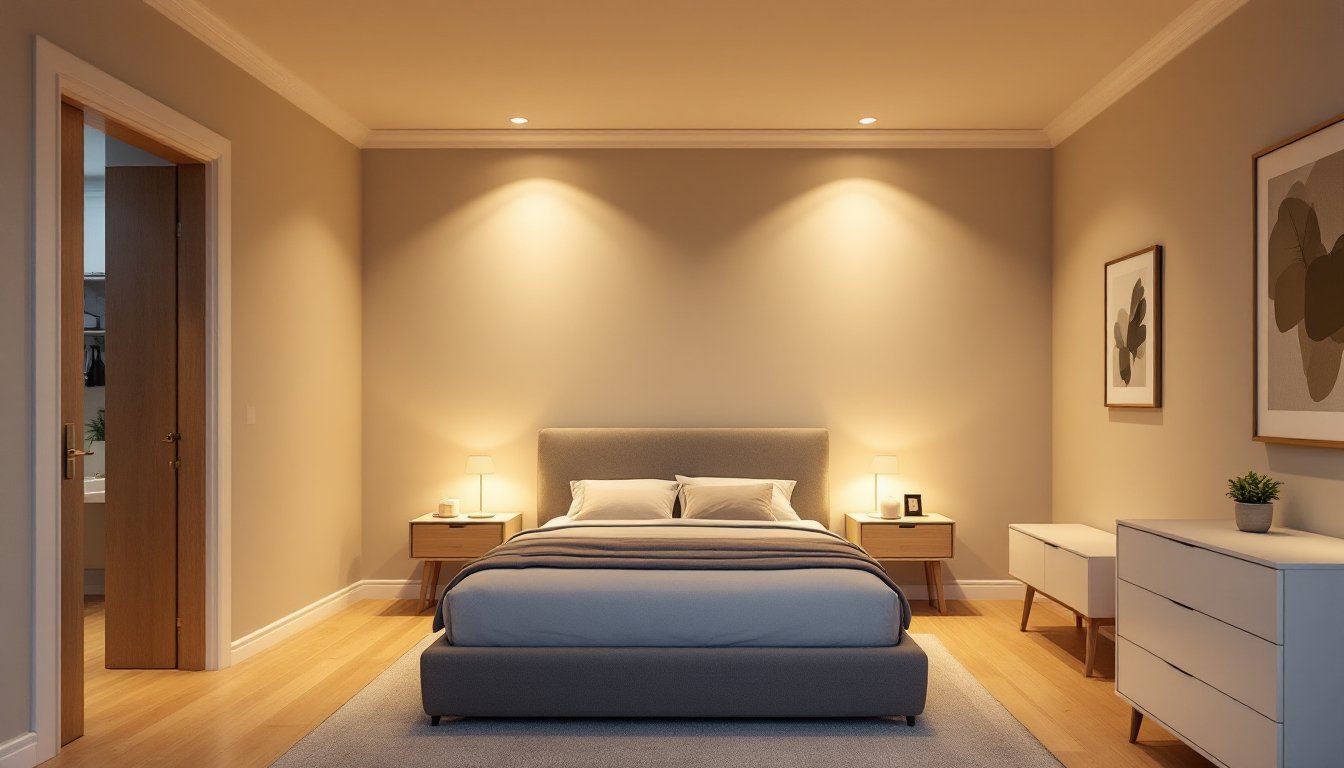
Finally, match color temperature to room function. Kitchens and workshops benefit from 4000K to 5000K (bright white to daylight) for task visibility. Living rooms and bedrooms feel more comfortable in the 2700K to 3000K range (warm white). Mixing color temperatures in adjacent spaces creates visual discomfort.
Installation Considerations and Spacing Guidelines
Proper spacing prevents dark spots and uneven lighting. A common starting point: divide the ceiling height by two to get spacing between fixtures. For an 8-foot ceiling, that’s roughly 4 feet on center. Measure from walls inward, placing the first row of lights about half that distance (2 feet) from the wall to avoid shadows along vertical surfaces.
In rectangular rooms, arrange lights in a grid pattern. In a 12×16-foot room with 8-foot ceilings, a layout of six lights (two rows of three, spaced 4 feet apart with 2 feet from walls) typically provides even coverage. Adjust based on light output, higher-lumen fixtures can spread farther apart.
Electrical requirements follow NEC standards. Each fixture must be on a circuit rated for the cumulative load. LED fixtures draw minimal current, so a standard 15-amp, 120-volt circuit can typically handle 10 to 15 lights without issue, but always verify total wattage doesn’t exceed 80% of circuit capacity (1,440 watts on a 15-amp circuit). Bathrooms and kitchens often require GFCI or AFCI protection depending on local code amendments.
Before cutting holes, locate ceiling joists with a stud finder and check for existing wiring or ductwork with a non-contact voltage tester. Running new wire often requires fishing cable through ceiling cavities: this is manageable in accessible attics but can be difficult in finished spaces with no attic access. If the project involves running new circuits or working in finished spaces where access is limited, hiring a licensed electrician makes sense, especially if the homeowner isn’t comfortable with electrical work.
Permits vary by jurisdiction. Many municipalities require permits for new circuits or modifications to existing ones, though simple fixture replacement often doesn’t. Check local building department requirements before starting.
Top Features to Look for in 6 Inch Recessed Lights
Energy efficiency should be non-negotiable. Look for ENERGY STAR® certified fixtures or retrofit kits. These meet strict efficiency and performance standards, typically delivering at least 65 lumens per watt. Quality LED units pay for themselves through reduced energy bills in two to three years compared to old incandescent or halogen cans.
Adjustable or directional trims add flexibility. Gimbal or eyeball trims tilt and rotate, directing light where needed, useful for highlighting artwork, washing walls, or focusing on work surfaces. Standard fixed trims work fine for general ambient lighting.
Color accuracy matters more than many DIYers realize. Check the CRI (Color Rendering Index) rating. Quality fixtures score 90 or higher, rendering colors naturally. Cheap LEDs with CRI below 80 make spaces look washed out and can distort paint colors or wood tones.
Airtight housings reduce energy loss. Look for units listed as ICAT (Insulation Contact Air Tight) if the goal is maintaining an efficient building envelope. These fixtures seal against air leakage between conditioned space and unconditioned attics, which matters significantly in climates with temperature extremes.
Finally, consider warranty length. Reputable manufacturers back LED fixtures with 5 to 10-year warranties. Anything less suggests lower-quality components. The driver (the electronic component that powers the LED) typically fails before the diodes themselves, so a solid warranty provides peace of mind.