Modern outdoor wall lighting does more than illuminate a front porch, it sets the architectural tone for an entire exterior. Clean lines, intentional placement, and quality fixtures elevate curb appeal while improving safety and visibility after dark. Whether flanking a garage door, highlighting an entryway, or accenting architectural features, the right wall lights blend form with function. This guide walks through what defines modern outdoor lighting, the tangible benefits it delivers, popular styles worth considering, and practical tips for choosing and installing fixtures that perform as well as they look.
Table of Contents
ToggleKey Takeaways
- Modern outdoor wall lighting combines simplicity, geometry, and purpose through clean lines, integrated LEDs, and minimal ornamentation to enhance curb appeal and architectural emphasis.
- LED-equipped modern fixtures consume only 8–15 watts while delivering equivalent light output to 60–100-watt incandescents, resulting in lower utility bills and fewer replacements over their 25,000–50,000 hour lifespan.
- Proper fixture placement matters: mount entryway lights at 66–72 inches high (scaled to one-third the door’s width), and flank garage doors with fixtures spaced 18–24 inches from each edge at 5.5–6 feet above grade.
- Modern outdoor wall lighting improves safety, security, and discourages intruders through intentional illumination paired with motion sensors or dusk-to-dawn automation features.
- Quality fixtures range from $60–$300+ per unit; investing in proven brands with robust seals, gauge metal, and high-grade LEDs ensures longevity and prevents premature color shift or dimming.
- Verify wet-location or damp-location ratings before purchasing, use outdoor-rated electrical boxes with gaskets, and apply silicone caulk around backplates—leaving a small weep point at the bottom for moisture escape.
What Makes Outdoor Wall Lighting Modern?
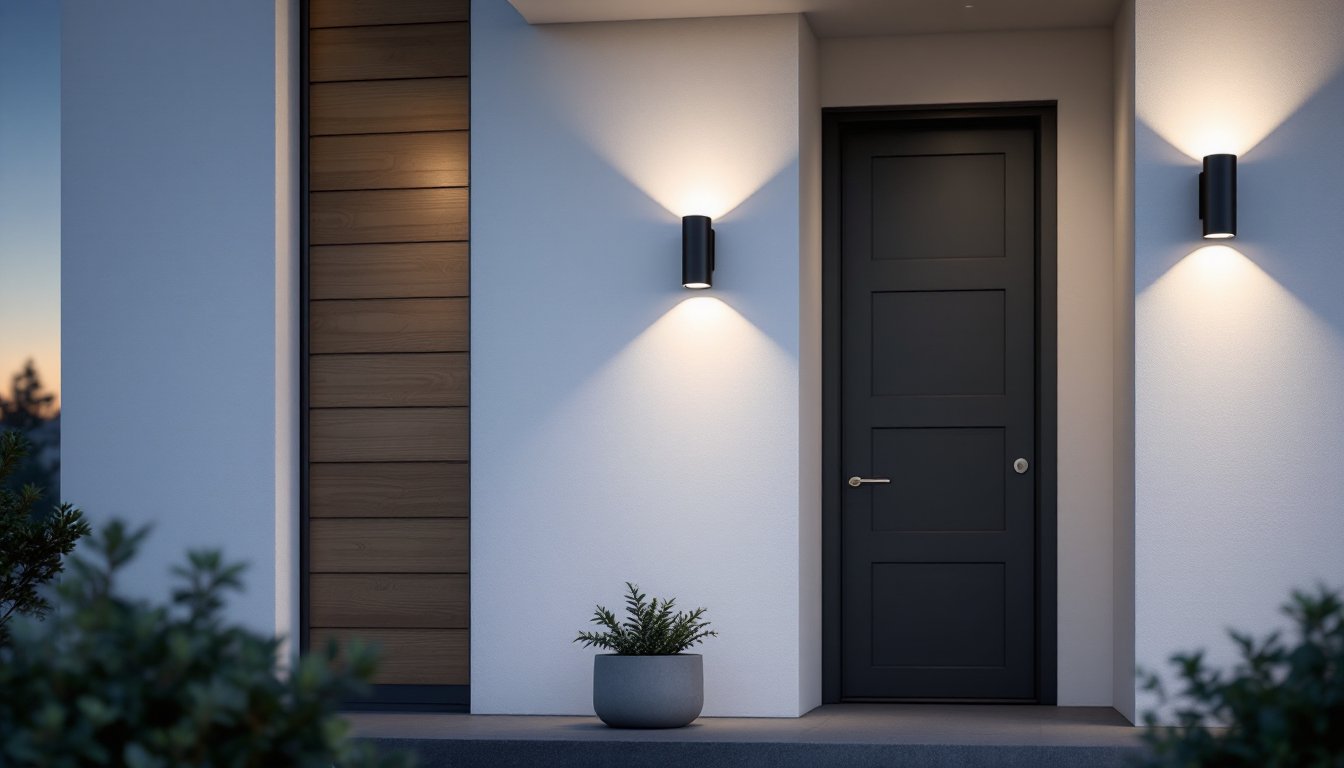
Modern outdoor wall lighting is defined by simplicity, geometry, and purpose. Unlike ornate traditional fixtures with scrollwork or faux candles, modern designs favor straight edges, cylindrical forms, angular housings, and uncluttered silhouettes. Materials lean toward aluminum, stainless steel, frosted glass, and powder-coated finishes in matte black, brushed nickel, or graphite.
The light itself is typically directed, up, down, or both, rather than radiating in all directions. Many modern fixtures use integrated LED modules rather than bulb sockets, reducing maintenance and improving energy efficiency. Color temperatures range from warm white (2700K–3000K) for inviting entryways to cooler whites (4000K+) for task-oriented areas like side doors or pathways.
Another hallmark: minimal ornamentation. If a fixture has decorative elements, they’re structural, like a geometric cage, slotted housing for shadow play, or a floating backplate. The design philosophy prioritizes how the fixture looks when off and how it casts light when on. Modern doesn’t mean sterile: it means intentional.
Top Benefits of Installing Modern Outdoor Wall Lights
Enhanced curb appeal ranks first. A well-chosen modern fixture visually updates a facade without touching siding, paint, or landscaping. Symmetrical placement at either side of a garage or entry door creates instant balance and polish.
Improved safety and security follow closely. Proper illumination discourages intruders and reduces trip hazards on steps, thresholds, and uneven walkways. Motion-sensor or dusk-to-dawn photocell options automate coverage without manual switching.
Energy efficiency is a practical advantage. LED-equipped modern fixtures draw 8–15 watts while delivering light output equivalent to 60–100-watt incandescents. Over a fixture’s lifespan, often 25,000–50,000 hours for quality LEDs, that translates to lower utility bills and fewer bulb replacements.
Architectural emphasis comes into play when fixtures highlight textures, materials, or design features. Up-and-down wall lights (sometimes called sconces) graze surfaces to reveal stone veneer, board-and-batten siding, or stucco detail. Directed beams also draw the eye to entryway surrounds, columns, or house numbers.
Finally, modern fixtures are typically weather-resistant and durable. Look for wet-location or damp-location ratings (depending on exposure), powder-coated or marine-grade finishes, and sealed housings. Quality units withstand UV exposure, rain, snow, and temperature swings with minimal finish degradation.
Popular Styles of Modern Outdoor Wall Lighting
Minimalist and Geometric Designs
Cube and cylinder fixtures dominate this category. A simple box-shaped housing in matte black or white mounts flush or slightly proud of the wall, with openings at top, bottom, or both to cast sharp beams. Cylindrical sconces achieve a similar effect with softer lines. These work especially well on contemporary or mid-century homes where every element follows a restrained visual language.
Slim vertical or horizontal bars offer another minimalist option. A narrow rectangular backplate supports a linear LED strip, often diffused through frosted acrylic or glass. The result is a clean strip of light that feels more like an architectural detail than a standalone fixture. Ideal for modern farmhouse or Scandinavian-inspired exteriors.
Geometric cages and open frames add interest without bulk. Think hexagons, triangles, or interlocking rectangles that cast patterned shadows on surrounding surfaces. These fixtures function as sculpture when off and dynamic light sources when on.
Industrial and Contemporary Fixtures
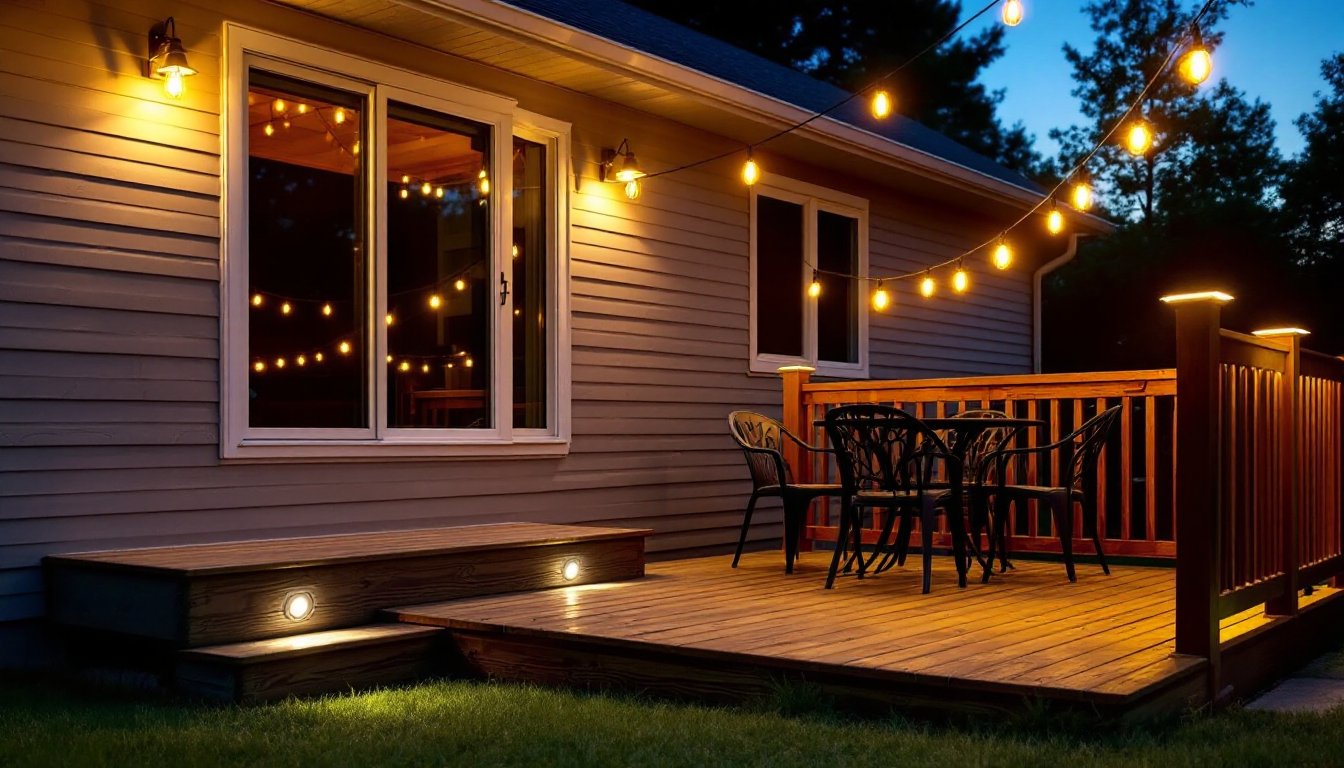
Industrial-modern hybrids blend raw materials, exposed fasteners, metal mesh, or Edison-style bulbs, with streamlined profiles. A gooseneck arm or angled shade in powder-coated steel delivers a utilitarian aesthetic softened by warm LED filament bulbs. These suit converted lofts, urban townhomes, or exteriors mixing brick, steel, and reclaimed wood.
Contemporary statement pieces push boundaries with sculptural forms, mixed materials (wood and metal, concrete and glass), or integrated smart features like tunable white light or app control. While bolder, they still adhere to modern principles: no unnecessary ornament, material honesty, and clear function. Reserve these for feature walls, covered entries, or architectural focal points where the fixture can stand out without competing with the overall design.
Choosing the Right Modern Wall Lights for Your Home
Start by measuring the mounting surface. For a single-car garage door (typically 8–9 feet wide), fixtures should be spaced 18–24 inches from each edge and mounted at 5.5–6 feet above grade for balanced illumination. Entry doors benefit from fixtures at eye level or slightly above (around 66–72 inches), scaled to the door’s width, one-third the door width is a common rule of thumb for fixture height.
Match the finish to existing hardware. If gutters, house numbers, and door hardware are matte black, black fixtures integrate seamlessly. Mixing metals (bronze with brushed nickel, for example) requires a deliberate design eye: safer bets stick to one or two finish families across all exterior accents.
Consider light output and spread. A fixture rated at 600–900 lumens works well for general illumination at entryways: higher output (1,200+ lumens) suits larger areas or task lighting. Check the beam angle, narrow spots highlight features, wide floods wash walls. For vertical surfaces, up-and-down fixtures provide both ambient glow and architectural interest.
Verify the location rating. Wet-location fixtures are sealed against direct rain and suitable for unsheltered walls, eaves, or coastal exposures. Damp-location units handle moisture and humidity but shouldn’t face direct precipitation: these suit covered porches or recessed alcoves. Using a damp-rated fixture in a wet location invites corrosion and early failure.
Smart features and controls are worth weighing. Photocell sensors turn lights on at dusk and off at dawn without wiring to a timer. Motion sensors add security and convenience but may not suit always-on accent lighting. Dimmable LEDs require compatible switches or modules, confirm before purchasing if dimming matters.
Finally, budget realistically. Quality modern outdoor wall lights range from $60 to $300+ per fixture depending on materials, brand, and features. Cheaper units often use thinner gauge metal, less robust seals, and lower-grade LEDs that shift color or dim prematurely. For high-visibility locations, investing in proven fixtures pays off in longevity and appearance.
Installation Tips for Maximum Impact
Turn off power at the breaker before removing existing fixtures or working on junction boxes. Use a non-contact voltage tester to confirm wires are dead, don’t rely on the switch alone.
Inspect the junction box and mounting surface. Most modern fixtures require a standard 4-inch round or octagonal electrical box rated for outdoor use and securely fastened to a stud or blocking. If the existing box is loose, rusted, or undersized, replace it. Exterior boxes should have a gasket or foam seal to prevent water intrusion. If mounting to fiber cement, vinyl, or stucco, use appropriate fasteners and seal penetrations with silicone caulk rated for exterior use.
Plan wire routing carefully. If running new circuits, 14 AWG copper wire on a 15-amp breaker or 12 AWG on a 20-amp breaker is standard for residential lighting per NEC guidelines. Use UF-B (underground feeder) cable for exposed outdoor runs or conduit where required by local code. Staple cable every 4.5 feet and within 12 inches of boxes. Always consult local building codes, some jurisdictions require permits and inspection for new exterior circuits.
Mount fixtures level and plumb. Use a torpedo level to check alignment before tightening mounting screws. Misaligned fixtures look sloppy and cast uneven light.
Connect wiring per manufacturer instructions. Typically: black (hot) to black, white (neutral) to white, and bare copper or green (ground) to the grounding screw or wire. Use wire nuts rated for outdoor use or push-in connectors if specified. Tuck connections neatly into the box, don’t let wires pinch between fixture and wall.
Seal all gaps. Apply a thin bead of clear silicone caulk around the backplate perimeter where it meets siding or masonry. Avoid caulking the bottom edge entirely, leave a small weep point for any trapped moisture to escape.
Test before finishing. Restore power and verify the fixture operates correctly, sensors respond as expected, and no flicker or buzzing occurs. If dimming, test through the full range.
Consider hiring a licensed electrician if running new circuits, working with aluminum wiring, or if the project involves complex switching (three-way, smart home integration). Permits and inspections aren’t just red tape, they ensure safe, code-compliant work that won’t create fire hazards or insurance headaches.
Proper installation amplifies every design choice. A premium modern fixture installed crooked or with visible gaps undermines its impact: a mid-range unit mounted cleanly and thoughtfully looks twice its price.