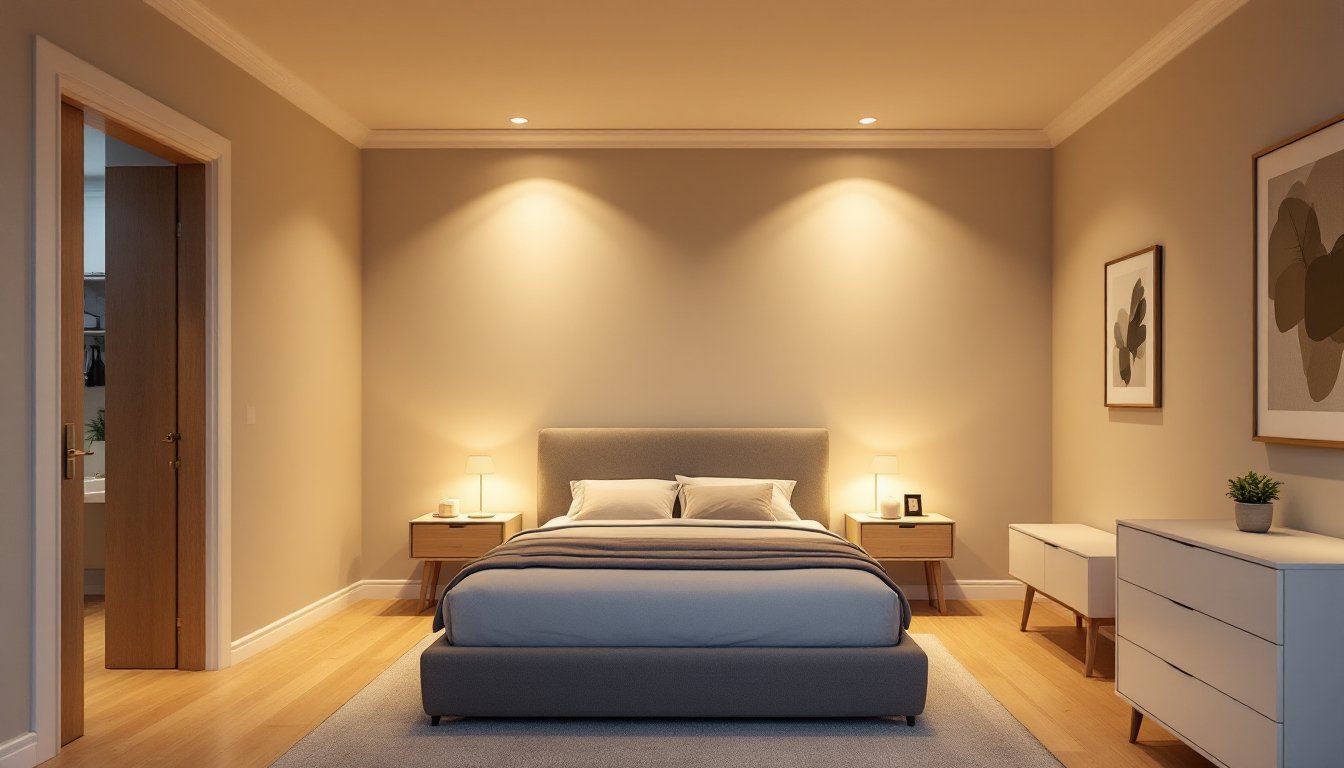
Recessed lighting, often called can lights or downlights, transforms a room by providing clean, unobtrusive illumination from above. Among the various sizes available, 4 inch recessed lighting has become the go-to choice for homeowners tackling smaller spaces, tight ceiling cavities, or projects requiring focused task lighting. Unlike bulkier 5 or 6 inch fixtures, 4 in. recessed lighting fits shallow plenum spaces, navigates around joists more easily, and delivers targeted light without overwhelming compact rooms. Whether upgrading a hallway, kitchen, or bathroom, understanding the options, from 4 inch LED recessed lighting to dimmable models, ensures the project delivers both function and energy efficiency.
Table of Contents
ToggleKey Takeaways
- 4 inch recessed lighting is ideal for smaller spaces, shallow ceiling cavities, and hallways, offering focused task lighting without overwhelming compact rooms.
- 4 inch LED recessed lighting delivers 600–800 lumens while using only 8–12 watts, lasting 25,000–50,000 hours and reducing energy bills compared to halogen or incandescent options.
- Choose between new construction housings (require attic access before drywall) and remodel housings (retrofit through a single 4-inch ceiling hole), depending on your installation scenario.
- Verify dimmer compatibility, IC-rating for insulation contact, and wet/damp ratings before purchasing to ensure safe operation in kitchens, bathrooms, and other specific environments.
- Proper spacing of 4–6 feet apart, combined with correct lumens (500–700 for task areas) and color temperature (3000K–4000K for kitchens, 2700K–3000K for living spaces), ensures optimal functionality and aesthetics.
What Is 4 Inch Recessed Lighting and Why Choose It?
4 inch recessed lighting refers to downlights with a 4-inch aperture, the visible opening in the ceiling once installed. The housing (or can) that sits above the drywall is typically wider, around 5 to 6 inches in diameter, to accommodate the mounting hardware and electrical connections.
Homeowners choose 4 inch fixtures for several practical reasons:
- Shallow plenum depth: Many 4 inch housings require only 4 to 5 inches of clearance above the ceiling, making them ideal for retrofit situations where joist depth or HVAC ductwork limits space.
- Tighter beam spread: The smaller aperture focuses light more precisely, reducing spill and creating pools of illumination, perfect for task lighting over countertops or highlighting artwork.
- Lower profile aesthetic: In rooms with lower ceilings (under 8 feet), smaller cans feel less intrusive and visually busy than larger fixtures.
- Code compliance: Some jurisdictions limit hole sizes in ceiling membranes for fire-rated assemblies. A 4-inch opening may simplify compliance compared to cutting larger penetrations.
That said, 4 inch fixtures produce less total lumens than their 6 inch counterparts when using equivalent bulb types. For general ambient lighting in large living areas, installers often need more fixtures spaced closer together. But in hallways, closets, powder rooms, and accent zones, the compact size and controlled beam make 4 inch recessed lighting a smart, efficient choice.
Types of 4 Inch Recessed Lights
New Construction vs. Remodel Housings
Recessed lighting housings fall into two main categories based on installation method:
- New construction housings: Feature adjustable metal brackets that nail or screw directly to ceiling joists before drywall goes up. They’re easier to position precisely and offer rock-solid support, but require access from above, making them impractical for retrofits in finished ceilings.
- Remodel (retrofit) housings: Use spring-loaded clips that grab the drywall from below, eliminating the need to remove ceiling material or access the attic. Most DIYers working in existing homes choose remodel cans. They install through a 4-inch hole cut with a hole saw, and the clips deploy once the housing is pushed into place.
Some manufacturers offer universal housings that work in both scenarios, though dedicated remodel fixtures tend to have better clip mechanisms and tighter trim fit.
LED, Halogen, and Incandescent Options
Bulb technology directly impacts energy use, heat output, and maintenance:
- 4 LED recessed lighting: The current standard. Integrated LED modules (the LED is built into the trim, not a replaceable bulb) deliver 600 to 800 lumens while drawing 8 to 12 watts. Rated for 25,000 to 50,000 hours, they rarely need replacement. Many 4 inch LED recessed lighting models are dimmable when paired with compatible dimmer switches (check the product spec sheet for dimmer compatibility, not all LEDs dim smoothly).
- Halogen: Uses less energy than incandescent but runs hot, often too hot for insulated ceilings without IC (insulation contact) rating. Halogen bulbs last around 2,000 hours and require replacement. They’re being phased out in many markets due to energy regulations.
- Incandescent: Largely obsolete for new installations. High energy consumption (40 to 65 watts for equivalent light output) and short lifespan make them impractical, though some remodel kits still accept screw-in bulbs.
For most projects, 4 inch LED recessed lighting offers the best return: lower electric bills, cooler operation, and minimal bulb changes. Look for fixtures rated for wet or damp locations if installing in bathrooms or covered porches.
Best Applications for 4 Inch Recessed Lighting
The compact beam and modest lumen output of 4 inch fixtures make them well-suited for specific applications:
- Task lighting in kitchens: Positioned directly over countertops, sinks, or islands, 4 in. recessed lighting eliminates shadows on work surfaces without the glare of larger floods.
- Hallways and foyers: Spaced every 4 to 6 feet, these fixtures provide even illumination in narrow spaces where pendants or surface-mount lights would feel cramped.
- Bathroom vanities and showers: Wet-rated 4 inch LED cans deliver focused light for grooming tasks. Install them centered over the mirror or directly above the shower stall (code typically requires GFCI protection on the circuit).
- Closets and pantries: A single 4 inch fixture often suffices for small walk-in closets, replacing outdated keyless porcelain sockets.
- Accent and art lighting: Adjustable (gimbal-style) 4 inch trims let users tilt the beam to highlight artwork, architectural details, or bookshelves.
Avoid using 4 inch recessed lighting as the sole source in large living rooms or open-concept great rooms. The narrow beam and lower lumen output mean installers need many fixtures to achieve adequate foot-candles, increasing labor and material costs. In those scenarios, 5 or 6 inch cans, or a combination of recessed and surface-mount fixtures, often perform better.
How to Choose the Right 4 Inch Recessed Lights for Your Space
Selecting the right fixtures involves matching technical specs to the room’s needs:
Lumens and color temperature: For task areas (kitchens, baths), aim for 500 to 700 lumens per fixture with a color temperature between 3000K and 4000K (bright white to neutral white). For bedrooms or living spaces, 2700K to 3000K (warm white) feels less clinical. Multiply the room’s square footage by 20 to estimate total lumens needed, then divide by lumens per fixture to determine quantity.
Dimming capability: If installing 4 inch recessed lighting dimmable models, verify the fixture is compatible with the dimmer switch type (phase-cut, ELV, or 0–10V). Mismatched components cause flickering or limited dimming range. Many quality LED fixtures list approved dimmer models in the installation manual.
IC vs. non-IC rating: IC-rated housings can contact insulation directly, critical in attics or cathedral ceilings where blown-in or batt insulation surrounds the can. Non-IC housings require a 3-inch clearance from insulation to prevent overheating, difficult to maintain in practice and a common code violation.
Wet, damp, or dry location rating: Showers and exterior soffits require wet-rated fixtures with sealed lenses. Bathrooms and covered patios need damp-rated models. Interior dry spaces have no special sealing requirements.
Trim style and finish: Common trims include baffle (reduces glare with ribbed interior), reflector (smooth white for maximum light output), and gimbal/eyeball (adjustable aiming). Match the trim finish (white, nickel, bronze) to other fixtures in the room for visual cohesion.
Beam angle: Most 4 inch fixtures offer beam spreads between 40° and 60°. Narrow beams (under 45°) create dramatic accent lighting: wider beams (50° to 60°) provide better general illumination.
Installation Considerations and Requirements
Installing 4 inch recessed lighting is a manageable DIY project for those comfortable working with electrical wiring, but it requires attention to code and safety.
Electrical and code compliance:
- All wiring must follow NEC (National Electrical Code) guidelines. Most recessed lights install on 15-amp lighting circuits using 14/2 Romex (or 12/2 on 20-amp circuits).
- Fixtures must connect to a junction box unless they’re approved for direct wiring (check the housing label).
- Bathrooms and within 6 feet of sinks or tubs require GFCI protection.
- If unsure about circuit capacity or wire routing, hire a licensed electrician. Overloading circuits or improper connections create fire hazards.
Tools and materials:
- Hole saw (4¼-inch) for cutting drywall openings (some remodel kits include a paper template)
- Voltage tester to confirm power is off before working
- Wire strippers, wire nuts, and electrical tape
- Stud finder to locate joists and avoid cutting into framing
- Drywall saw or reciprocating saw if enlarging existing holes
Step-by-step overview for remodel installations:
- Plan spacing: Measure the room and mark fixture locations. Common spacing is 4 to 6 feet apart, positioned halfway between the wall and the room’s center for even coverage.
- Cut holes: Use the hole saw to cut clean 4-inch openings at each marked location. Check for obstructions (wiring, pipes, HVAC ducts) before cutting.
- Run cable: Fish 14/2 or 12/2 Romex from the switch box to each fixture location, leaving 12 to 18 inches of slack at each hole.
- Wire the housing: Strip cable sheathing and connect black (hot) to black, white (neutral) to white, and bare copper (ground) to the fixture’s ground wire or screw using wire nuts. Tuck connections into the housing’s junction box.
- Mount the can: Push the housing into the ceiling hole until the clips engage the back of the drywall. Tug gently to confirm a solid grip.
- Install trim: Most LED retrofit kims snap or twist-lock into the housing. Ensure the trim sits flush against the ceiling with no gaps.
- Test: Restore power and test each fixture. If using dimmers, cycle the dimmer to verify smooth operation.
Safety and permits:
- Wear safety glasses when cutting overhead, drywall dust and debris fall directly into the face.
- Turn off power at the breaker, not just the switch, and use a voltage tester to confirm.
- Many jurisdictions require electrical permits for adding new circuits or fixtures. Check with the local building department before starting work. Inspections ensure the installation meets fire and shock protection standards.
For projects involving attic access, structural modifications, or commercial spaces, a licensed electrician ensures compliance and reduces liability. DIYers comfortable with basic wiring can handle straightforward remodel installations, but when in doubt, professional help prevents costly mistakes.