Low voltage outdoor lighting has become the go-to solution for homeowners looking to enhance their landscapes without the cost, complexity, or hazard of running 120-volt line power. Operating on just 12 volts through a simple transformer, these systems are safer to install, easier on the electric bill, and deliver professional-looking results. Whether a homeowner wants to illuminate a flagstone path, showcase a mature oak, or add ambiance to a deck, low voltage fixtures offer flexibility that standard wiring can’t match. This guide breaks down practical, proven lighting ideas that work for real yards, no landscape designer required.
Table of Contents
ToggleKey Takeaways
- Outdoor low voltage lighting operates safely on 12 volts, requires no electrician installation, and costs under $5 per month to run, making it ideal for homeowners seeking professional results without complexity.
- Proper pathway placement every 8–10 feet, combined with bollard lights and hardscape-embedded fixtures, provides both safety and curb appeal while maintaining a subtle aesthetic.
- Accent lighting techniques like uplighting, moonlighting, and silhouette lighting showcase trees and landscape features using warm white (2700–3000K) color temperatures for natural-looking depth and drama.
- Deck and patio lighting should combine post cap lights for ambient glow with recessed task lights in step risers and under railings, plus dimmer-compatible transformers for flexible entertaining.
- Motion-activated fixtures near dark corners and step lights on outdoor stairs protect against liability while using low voltage’s inherent safety advantage for areas where children and pets are present.
- Direct-burial-rated wire, weatherproof transformer enclosures mounted 12 inches off ground, and shields to prevent light spillage into neighbors’ yards ensure code compliance and sustainable outdoor low voltage lighting systems.
Why Low Voltage Lighting Is the Smart Choice for Outdoor Spaces
Low voltage systems run on 12 volts instead of standard household 120-volt current, which means they’re safer to handle and don’t require an electrician in most jurisdictions. The transformer plugs into a standard outdoor GFCI outlet and steps down the voltage before sending power through buried landscape wire.
Installation is straightforward enough for most DIYers. There’s no need to bury conduit in deep trenches, low voltage wire can be laid in a shallow 6-inch trench or even secured along fences and under mulch in many areas. That said, always check local codes: some municipalities have specific requirements even for low voltage runs.
Energy efficiency is another major advantage. Most low voltage fixtures use LED bulbs that draw 3–7 watts per fixture, compared to 40–60 watts for older halogen models. A typical 150-watt transformer can power 15–20 LED fixtures, and the entire system might cost less than $5 per month to run.
Safety is the clincher. A 12-volt shock won’t cause injury, which makes these systems ideal for areas where kids and pets roam. Fixtures are also easier to relocate as plantings mature or landscape needs change, just unclip the wire connector and move the stake.
Pathway and Walkway Lighting Ideas
Path lights serve a dual purpose: they guide foot traffic and add curb appeal. The standard approach is to place fixtures every 8–10 feet along both sides of a walkway, staggered to avoid a runway effect. For narrower paths or tighter budgets, lights on one side at 6-foot intervals work fine.
Bollard lights (short post-style fixtures, typically 18–24 inches tall) provide broader light spread and hold up better in high-traffic areas than stake-mounted units. They’re a solid choice along driveways or wide garden paths where a low-profile fixture might get clipped by a mower.
For a more subtle look, consider hardscape lights embedded in retaining walls, step risers, or between pavers. These sit flush with the surface and cast light downward, reducing glare while clearly marking elevation changes, critical for safety on stairs and slopes.
Material matters. Cast aluminum or brass fixtures resist corrosion far better than plastic, especially in coastal or high-moisture climates. Powder-coated finishes add another layer of protection and come in blacks, bronzes, and coppers that blend with most landscapes.
Avoid the temptation to overlight. Pathways need just enough illumination to define edges and reveal obstacles, 2–3 watts per fixture is typically sufficient for LEDs. Too much light washes out the landscape and creates harsh shadows.
Accent Lighting to Highlight Your Best Landscape Features
Uplighting is the classic technique for showcasing trees, architectural elements, and specimen plants. A well light (a recessed canister fixture) installed at the base of a tree trunk sends light up through the canopy, creating dramatic shadows and depth. For multi-trunk trees like birch or crape myrtle, two fixtures at 45-degree angles give better coverage.
Bullet or spot fixtures mounted on stakes or walls let homeowners direct a focused beam onto focal points: a boulder, sculpture, fountain, or textured wall. Look for adjustable heads so the beam angle can be fine-tuned as plants grow. A narrow 10–15 degree spot works for small targets, while a 30–40 degree flood covers larger areas.
Moonlighting involves mounting fixtures high in trees and aiming them downward to mimic natural light filtering through branches. It’s subtler than uplighting and works beautifully over patios or seating areas. Use fixtures with glare shields or louvers to keep the light source from shining directly into sight lines.
Color temperature matters more than most DIYers realize. Warm white (2700–3000K) complements most plantings and hardscapes, while cooler temperatures (4000K+) can make foliage look washed out. Stick with warm tones unless highlighting white blooms or modern concrete features.
Don’t forget maintenance access. Trees grow, mulch shifts, and fixtures need occasional repointing. Avoid burying junction boxes under permanent hardscape.
Deck, Patio, and Outdoor Living Area Lighting
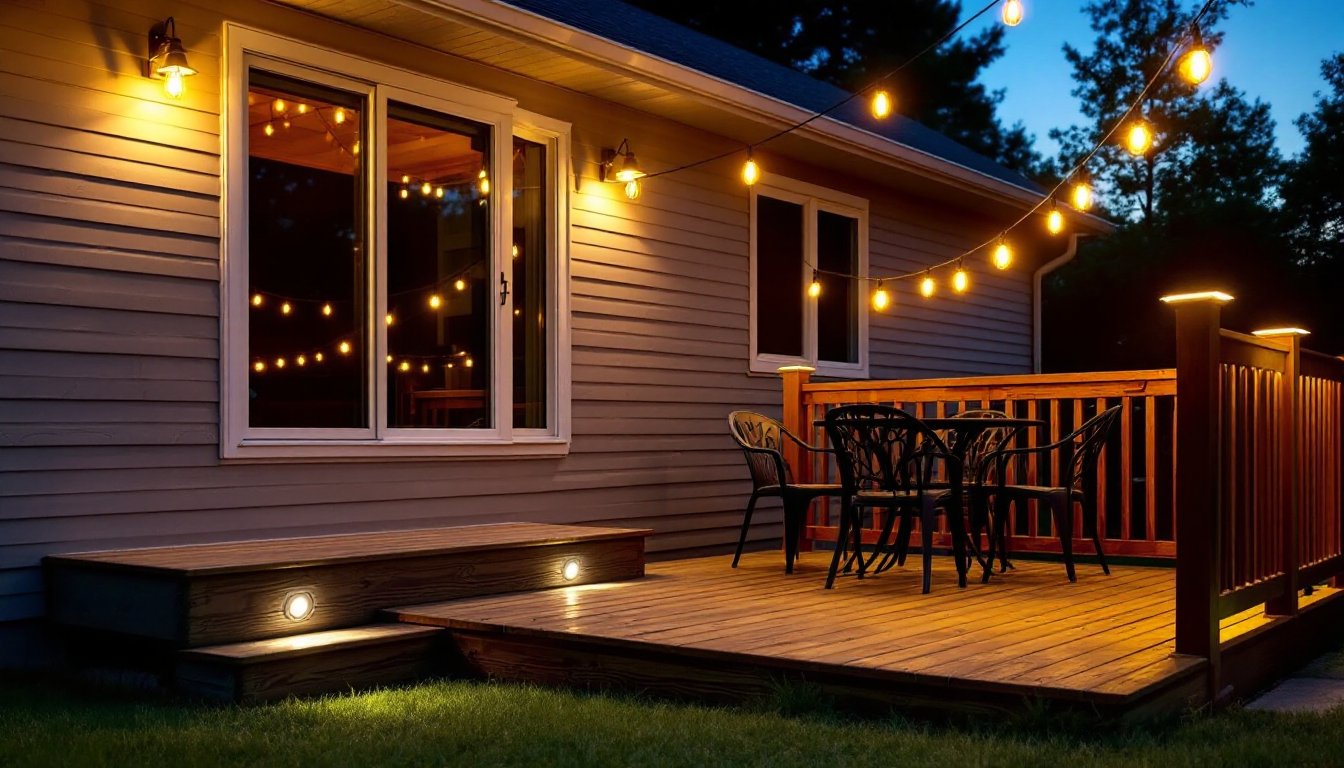
Deck post cap lights are a simple retrofit for existing railings. They replace standard post caps and usually connect to the low voltage system via wire run through or alongside the railing. They provide ambient light without taking up floor space, though they won’t illuminate steps or seating areas on their own.
For task lighting, install recessed deck lights in stair risers, under railings, or along the perimeter of built-in benches. These fixtures sit flush with the surface and deliver focused downlight exactly where it’s needed. Most are available in round or square trim styles to match the deck aesthetic.
String lights have moved beyond the patio party look. Modern low voltage café-style strands with integrated LEDs offer the same warm glow as Edison bulbs but run cool and last 25,000+ hours. They’re ideal for pergolas, covered patios, or strung between posts, just make sure the transformer can handle the total wattage.
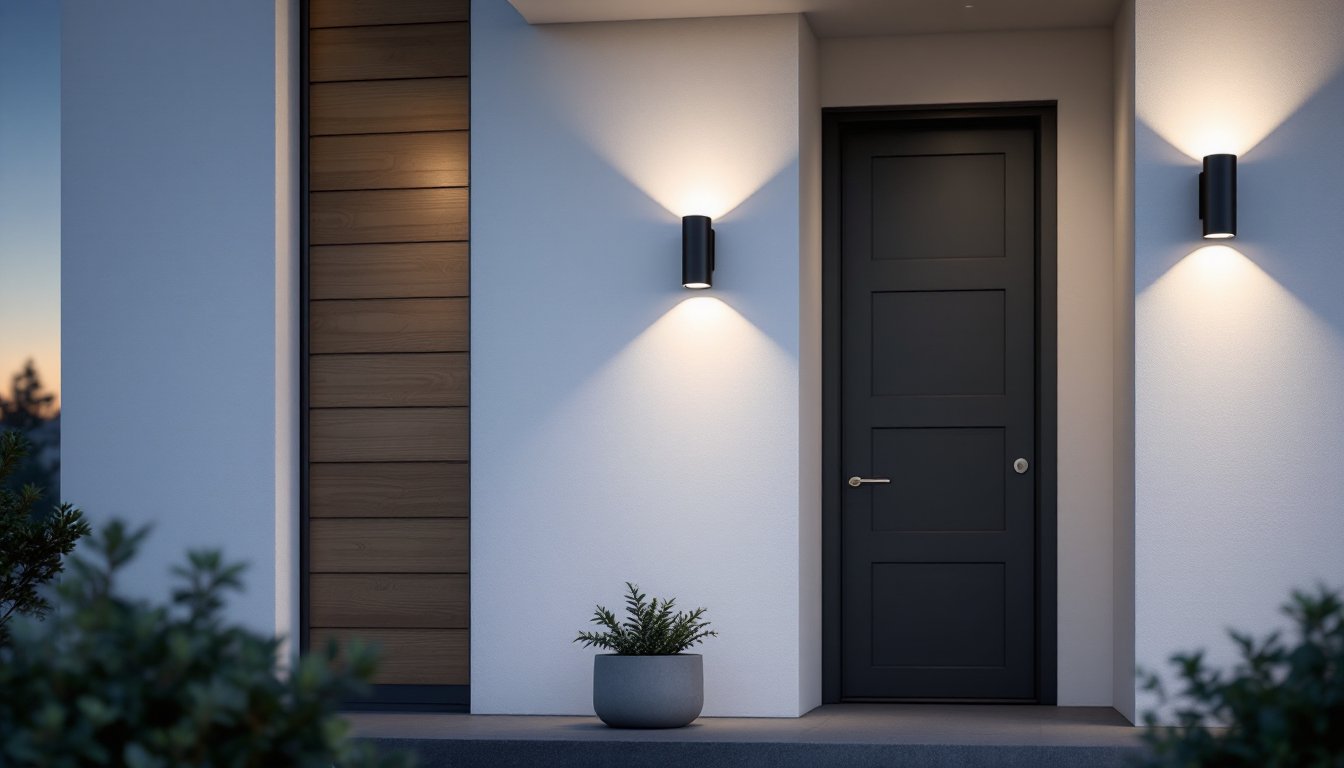
Wall sconces flanking a door or outdoor kitchen add symmetry and functional light. Choose fixtures rated for wet locations (not just damp) if they’ll be exposed to direct rain. Most low voltage sconces use a junction box mounted to the structure, then hardwired back to the transformer.
Dimmer-compatible transformers are worth the extra cost. Being able to dial down the intensity for evening entertaining or ramp it up for grilling makes a noticeable difference in how the space is used.
Garden and Plant Bed Illumination Techniques
Wash lighting uses fixtures with wide flood beams (60–120 degrees) placed at the edge of plant beds to graze light across foliage. This technique works especially well for ornamental grasses, low shrubs, and groundcovers, creating texture and movement when a breeze picks up.
Silhouette lighting positions a fixture behind a plant to backlight its form against a wall or fence. It’s dramatic with plants that have strong outlines, yucca, agave, Japanese maple, and requires a smooth, light-colored surface behind the plant for the effect to register.
For flower beds that change seasonally, use adjustable stake lights rather than fixed in-ground canisters. This lets the homeowner reposition fixtures as annuals are swapped out or perennials spread. Look for models with tool-free adjustment knobs.
Color-changing LEDs have improved significantly in the last few years. RGB fixtures let users shift hues for holidays or events, though most landscapes look best in static warm white. If going the color route, choose fixtures with a quality white mode, not just red, green, and blue LEDs fired simultaneously.
Be mindful of light pollution. Fixtures aimed upward or outward can spill into neighbors’ yards or bedroom windows. Use shields, hoods, or directional lenses to keep the light where it’s intended, and avoid over-saturating beds with too many fixtures.
Security and Safety Lighting Solutions
Motion-activated low voltage lights combine the safety benefits of 12-volt systems with the deterrent effect of sudden illumination. These work well near side gates, sheds, or dark corners of the yard. Most units feature adjustable sensitivity and timer settings to reduce false triggers from passing animals.
Step and riser lights aren’t optional, they’re a code requirement in many jurisdictions for outdoor stairs with three or more risers. Even where not mandated, they’re cheap insurance against trip-and-fall liability. Install them on every other riser at minimum, or on every riser for stairs that see heavy use after dark.
For long driveways or rural properties, driveway marker lights improve visibility without the glare of floodlights. These small, low-profile fixtures mount flush with the pavement or on short stakes and define the edges of the drive. Some models include reflective lenses that also bounce back headlight beams.
Transformer placement affects safety. Mount it on an exterior wall near a GFCI outlet, inside a weatherproof enclosure, and at least 12 inches off the ground to avoid splash and snow contact. Label the breaker inside the panel so it’s easy to identify during maintenance.
Always use direct-burial-rated wire for any underground runs, even if local code doesn’t require it. Standard landscape wire jacket will degrade in wet soil within a few years, leading to voltage drop, corrosion, and fixture failures.
Conclusion
Outdoor low voltage lighting transforms a landscape from a daytime-only feature into an around-the-clock asset. With careful planning, quality fixtures, and attention to installation details, most homeowners can design and install a system that rivals professional work, without the professional price tag. Start with one zone, test the layout before burying wire, and expand as budget and ambition allow.