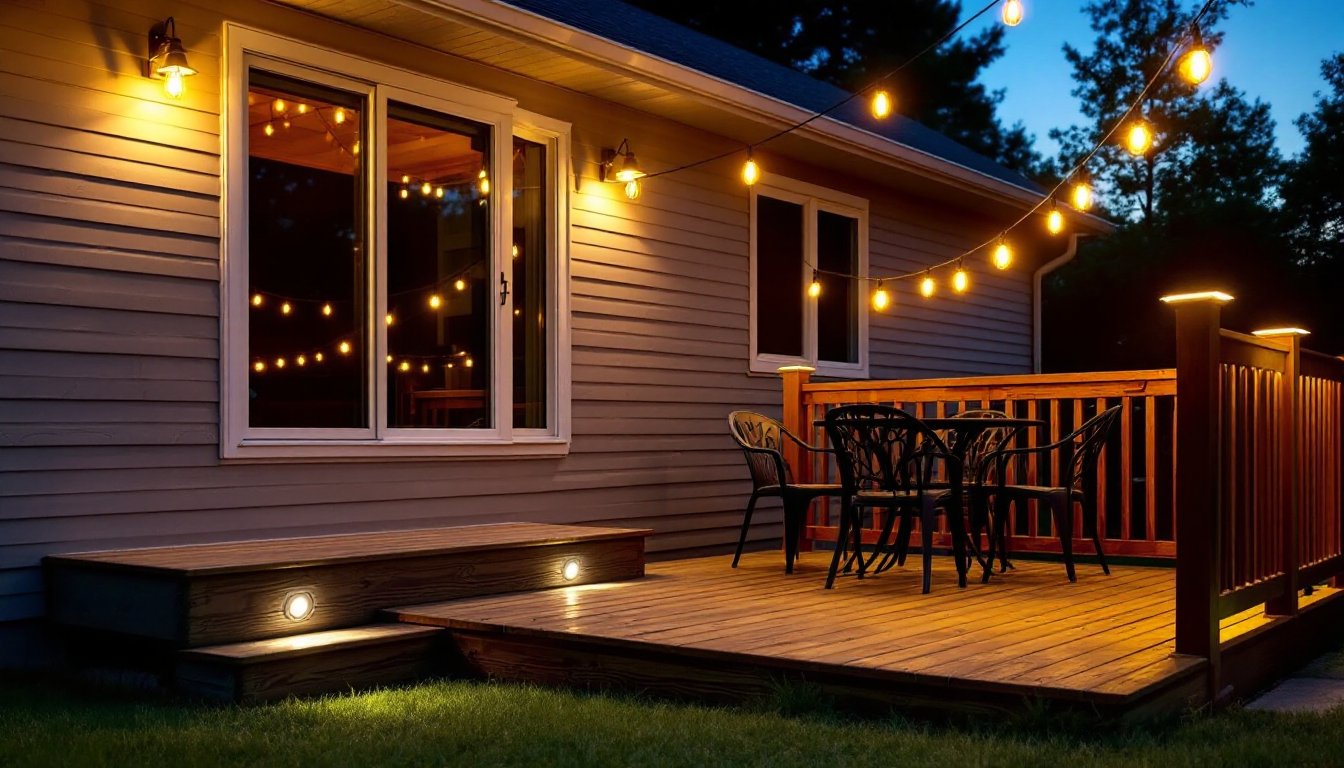
Outdoor stairs account for thousands of preventable injuries each year, and poor lighting is a leading culprit. Beyond safety, though, well-placed deck stair lighting transforms a utilitarian feature into an architectural highlight after dark. Whether the goal is subtle guidance or dramatic ambiance, today’s lighting technology offers more options than ever, from low-voltage LEDs to solar fixtures that install in minutes. This guide walks through the most effective deck stair lighting solutions, covering installation considerations, performance trade-offs, and design strategies that balance function with curb appeal.
Table of Contents
ToggleKey Takeaways
- Deck stair lighting prevents thousands of injuries annually by defining tread edges and creating visual continuity, while also transforming stairs into architectural highlights after dark.
- Recessed LED step lights offer a sleek, modern look with 12V or 24V DC systems, requiring proper ventilation to prevent heat damage and overheating of LED fixtures.
- LED strip and rope lights deliver continuous illumination along stringer edges or beneath handrails, with wire gauge selection critical—use 18 AWG for runs under 10 feet and 14 AWG for longer distances to avoid brightness dimming.
- Solar-powered stair lights eliminate wiring and electricity costs but depend on sun exposure and deliver only 5–20 lumens per fixture, making them best suited as supplemental lighting rather than primary stairway illumination.
- Layering multiple fixture types—step lights for tread definition, post caps for ambiance, and strips for visibility—creates a cohesive deck stair lighting system that balances safety and curb appeal.
- Motion-activated and smart lighting options extend LED lifespan and reduce power consumption, but shouldn’t be the sole illumination source for high-traffic stairs where constant low-level lighting prevents falls.
Why Deck Stair Lighting Is Essential for Safety and Style
The International Residential Code (IRC) doesn’t mandate lighting on exterior stairs in most jurisdictions, but it does require consistent tread depth and riser height, dimensions that become invisible hazards in the dark. A single misstep on uneven stairs can mean a trip to urgent care.
Proper stair lighting addresses two needs. First, it defines each tread edge so users see depth and distance accurately. Second, it creates visual continuity from the deck to ground level, reducing the disorientation that comes with sudden elevation changes. Fixtures that cast light downward or outward, rather than into eyes, perform best for wayfinding.
From a design perspective, stair lighting extends usable outdoor space into evening hours. It highlights deck architecture, adds depth to landscaping, and increases home value. A well-lit stairway signals attention to detail and finish quality, especially when selling or hosting.
Budget varies widely. Basic solar path lights start around $5–$8 per unit, while low-voltage LED systems with transformers and wire runs can reach $200–$400 for a typical 10-step staircase. Electrician labor adds $75–$150 per hour if hard-wiring to household circuits. Most DIYers can handle low-voltage or solar installs without permits, but 120V line-voltage work often requires a licensed electrician and inspection.
Recessed LED Step Lights for a Sleek, Modern Look
Recessed step lights mount flush into stair risers or stringers, creating clean lines with minimal visual clutter. They’re the go-to choice for contemporary deck designs where hardware should disappear during daylight.
Most recessed fixtures measure 2–3 inches in diameter and require a hole saw or spade bit for installation. They run on 12V or 24V DC, fed by a weatherproof transformer. Wiring typically routes through the stringer or behind the riser, so new construction or major deck renovations offer the easiest install window. Retrofitting can work if there’s access behind the risers, otherwise, surface-mount alternatives make more sense.
Look for fixtures rated IP65 or higher for water and dust resistance. Marine-grade stainless steel or powder-coated aluminum housings resist corrosion better than plastic in humid climates. LED color temperature matters: 3000K produces warm white that flatters wood and stone, while 4000K offers crisper visibility for navigating.
Installation involves drilling pilot holes, running low-voltage wire (usually 12 AWG or 14 AWG for runs under 50 feet), connecting to a transformer, and securing fixtures with mounting screws or compression clips. Silicone caulk around bezels prevents water infiltration. Most low-voltage systems draw 1–3 watts per fixture, so a 60W transformer can power 20–40 lights depending on wattage.
One caution: recessed lights concentrate heat in a small cavity. Ensure the fixture is rated for enclosed spaces and that there’s adequate ventilation behind the riser. Overheating shortens LED lifespan and can scorch treated lumber.
Strip Lighting and Rope Lights for Continuous Illumination
LED strip lights and rope lights deliver unbroken lines of illumination along stringer edges, beneath handrails, or under tread noses. This approach bathes the entire stairway in soft, even light, ideal for stairs with irregular tread depth or for users with limited vision.
Strip lights come in flexible rolls, typically 16 feet per reel, with adhesive backing for quick mounting. 12V DC is standard, though 24V options run longer distances with less voltage drop. Strips are available in various densities, 30, 60, or 120 LEDs per meter, with higher density producing smoother, more continuous light. Waterproof strips carry an IP67 or IP68 rating and include a silicone sleeve that seals LEDs from moisture.
Rope lights use a thicker PVC or silicone tube housing, making them more durable but less flexible than strip lights. They’re easier to clean and better suited to high-traffic areas where the fixture might get kicked or scraped.
Installation is straightforward: clean the mounting surface with isopropyl alcohol, peel the adhesive backing, press the strip firmly, and secure ends with aluminum channel or mounting clips for added hold. Channels also diffuse hotspots and protect the strip from UV degradation. Wire the positive and negative leads to a transformer, ensuring polarity matches.
Be mindful of voltage drop on long runs. Beyond 20 feet, brightness dims noticeably unless wire gauge increases or the strip is powered from both ends. Use 18 AWG wire for runs under 10 feet, 16 AWG for 10–25 feet, and 14 AWG beyond that.
Dimming capability is a bonus. Most 12V strips work with PWM (pulse-width modulation) dimmers, allowing brightness adjustment for different occasions. Pair with a timer or photocell to automate on/off cycles and extend LED life.
Post Cap and Railing Lights for Ambient Glow
Post cap lights replace or top standard 4×4 or 6×6 deck posts, casting ambient illumination downward and outward. Railing lights mount to horizontal rails, either clipping onto the top rail or integrating into balusters. Both types light the surrounding area rather than individual treads, so they work best in combination with step-specific fixtures.
Post caps are available in solar and low-voltage versions. Solar models include a small photovoltaic panel on top, a rechargeable battery, and an LED module, no wiring required. They’re easy to install (just slip over the post and secure with screws), but light output is limited, typically 10–30 lumens per cap. Cloudy climates and shaded decks reduce performance.
Low-voltage post caps connect to a 12V transformer and deliver 50–100 lumens or more, with consistent brightness regardless of weather. Wiring runs up through the post interior or along the outside, concealed by trim or paintable conduit. Cast aluminum and copper caps offer durability and develop attractive patinas over time.
Railing lights come in dozens of styles: recessed pucks that nestle between balusters, flat discs that mount under the top rail, or decorative lanterns that clip onto rails. Installation varies, but most use mounting brackets and #8 or #10 screws. Low-voltage versions daisy-chain together with quick-connect pigtails, simplifying wire management.
These fixtures provide ambient “wash” rather than task lighting. They’re excellent for defining deck boundaries and creating mood, but they won’t reliably illuminate tread edges on their own. Combine post caps with recessed step lights or strip lighting for full coverage.
One practical tip: ensure post caps fit snugly. Wind can lift poorly secured caps, and moisture intrusion rots posts from the top down. Use exterior-grade construction adhesive or a bead of silicone along the inside rim for a weatherproof seal.
Solar-Powered Stair Lights for Eco-Friendly Efficiency
Solar stair lights eliminate trenching, transformers, and ongoing electricity costs. Each fixture includes a small solar panel, a NiMH or lithium-ion battery, and an LED module. After a full day of sun exposure, most provide 6–8 hours of illumination.
They mount directly to risers, posts, or railings using screws or adhesive pads. Installation takes minutes per light, no electrical knowledge required. That simplicity makes solar lighting attractive for renters, quick upgrades, or remote decks far from power sources.
Performance depends heavily on solar panel orientation and local weather. Panels should face south (in the Northern Hemisphere) with minimal shade from trees, eaves, or railings. Lights in shaded locations may glow dimly or fail to charge. Models with separate solar panels connected by a wire pigtail allow the panel to be mounted in full sun while the light sits in shade, useful for covered stairs.
Light output ranges from 5–20 lumens per fixture, adequate for wayfinding but not bright task lighting. Battery lifespan is 2–4 years depending on quality and climate: replacement batteries are available for most models but can cost half the price of a new fixture.
Look for tempered glass or polycarbonate lenses to resist impact, and stainless steel or ABS plastic housings for corrosion resistance. Avoid cheap all-plastic units: UV exposure makes them brittle within a season.
Solar lights work well as supplemental lighting or in low-traffic areas. For primary stairway illumination, low-voltage systems deliver more reliable brightness and longevity. Pair solar post caps with hardwired step lights to balance convenience and performance.
Smart and Motion-Activated Lighting Options
Smart lighting and motion sensors add automation and energy efficiency. Lights turn on only when needed, extending bulb life and reducing power draw, especially useful for stairs that see sporadic use.
Motion-activated fixtures use passive infrared (PIR) sensors to detect heat signatures within a 10–20 foot range. When someone approaches, lights illuminate for a preset duration, typically 30 seconds to 3 minutes, then shut off. Sensitivity and timer length are usually adjustable via dials or app controls.
These systems work with low-voltage LED step lights, strip lights, and post caps. Some fixtures have integrated sensors: others use a standalone PIR module wired inline before the lights. Installation mirrors standard low-voltage setups, with the sensor positioned where it has a clear view of the approach path. Avoid aiming sensors at heat sources like air conditioner compressors or dryer vents, which trigger false activation.
Smart lighting systems integrate with platforms like Google Home, Amazon Alexa, or Apple HomeKit. Users control brightness, color (if RGB-capable), schedules, and scenes via smartphone apps or voice commands. Most smart outdoor lighting runs on 12V or 24V DC, controlled by a smart transformer or in-line controller.
Some advanced systems include dusk-to-dawn photocells and geofencing, which turns lights on automatically when a phone approaches the property. Integration with home security systems allows lighting to respond to doorbell cameras or alarm triggers.
Installation complexity increases with smart features. Basic motion sensors add a few wire connections: full smart systems may require Wi-Fi signal extenders for outdoor coverage and app setup. Budget an extra $50–$150 for smart controllers and sensors beyond fixture costs.
Safety note: Motion lighting shouldn’t be the sole illumination source for stairs with heavy foot traffic. Elderly users and children benefit from constant low-level lighting to prevent falls during the sensor’s brief activation delay.
Conclusion
Deck stair lighting blends safety, usability, and aesthetics in ways few other upgrades match. Recessed LEDs suit modern minimalists, while solar options offer quick wins without wiring. Smart controls and motion sensors bring automation for efficiency-minded homeowners. The best installations layer multiple fixture types, step lights for tread definition, post caps for ambiance, and strips for continuous visibility, creating a cohesive system that performs as well as it looks. Start with the primary goal, match the technology to the site conditions, and don’t skip the transformer sizing or weatherproofing details. Done right, stair lighting is a project that pays dividends every evening.