Choosing outdoor lighting isn’t about grabbing the brightest bulb at the hardware store. It’s about matching lumen output to the job, whether that’s safely lighting a walkway, deterring intruders, or highlighting a prized Japanese maple. Too few lumens and the fixture is decorative at best. Too many and the yard looks like a used car lot at midnight.
Lumens measure the total amount of visible light a bulb or fixture emits. Unlike watts, which measure energy consumption, lumens tell the actual brightness story. With the shift to LED technology, a 10-watt LED can produce the same light output as an old 60-watt incandescent, making lumens the only reliable metric for comparing bulbs.
Table of Contents
ToggleKey Takeaways
- Lumens measure actual brightness output, making them the only reliable metric for comparing outdoor lighting bulbs and fixtures regardless of wattage.
- Outdoor lighting needs vary by purpose: pathways require 100–200 lumens, security lights demand 700–3,000 lumens, and accent lighting uses 50–300 lumens depending on subject size and distance.
- Beam angle significantly affects perceived brightness—a narrow 15-degree spot beam concentrates light intensely, while a 120-degree flood beam spreads the same lumens across a wider area with less intensity per square foot.
- Ambient light from streetlamps and neighboring properties, surface reflectivity, mounting height, and local dark-sky ordinances all impact how many lumens you actually need for outdoor lighting applications.
- Quality LED fixtures with L70 ratings of 50,000+ hours maintain brightness longer, so budgeting an extra 20% in initial lumens helps offset degradation from cheaper economy options.
Understanding Lumens and Outdoor Lighting Brightness
Lumens quantify brightness, plain and simple. A single candle produces about 12 lumens. A typical 60-watt incandescent bulb emits around 800 lumens. Modern LED bulbs achieve the same output while drawing a fraction of the power, which is why outdoor lighting conversations now center on lumens rather than wattage.
Outdoor applications demand different brightness levels than interior spaces. A living room might need 1,500–3,000 lumens total for comfortable visibility, but outdoor lighting serves specific, localized purposes: marking a path, illuminating a doorway, or flooding a driveway with security lighting. The surrounding darkness amplifies the effect, 200 lumens on a pathway feels plenty bright at night, while the same output would barely register indoors during the day.
Beam angle also affects perceived brightness. A narrow 15-degree spot beam concentrates 500 lumens into a tight circle, creating intense illumination over a small area. The same 500 lumens spread across a 120-degree flood beam covers more ground but appears dimmer per square foot. Most pathway and landscape fixtures use flood or wide flood beams (90–120 degrees), while accent and security lights often employ spot or narrow flood patterns (15–60 degrees).
Color temperature, measured in Kelvin (K), influences how bright a light feels. Warm white LEDs (2700–3000K) produce a softer, amber-toned glow that feels less intense. Cool white or daylight LEDs (4000–5000K) appear crisper and brighter to the human eye, even at identical lumen outputs. For most residential outdoor applications, warm white strikes the best balance between visibility and ambiance.
Recommended Lumen Levels by Outdoor Lighting Type
Pathway and Walkway Lighting
Pathway lights require 100–200 lumens per fixture to safely illuminate steps, edges, and grade changes without creating harsh glare. These low-level fixtures typically install every 6–8 feet along walks, driveways, and garden paths. The goal is gentle pool lighting that defines the route without overpowering the landscape.
For step lights recessed into risers or retaining walls, 50–100 lumens per fixture suffices. The lower mounting height and focused downward beam requires less output. Stair treads should be visible without washing out, enough light to see each edge clearly, not enough to trip a motion sensor three houses down.
Driveway markers and bollard lights work well in the 100–200 lumen range, though wider driveways or commercial applications may push to 300 lumens per fixture. Space bollards 10–15 feet apart, depending on beam spread and ambient light from street lamps or neighbors.
Critical point: These are lumens per fixture, not total lumens for the entire path. A 50-foot walkway might use ten 150-lumen fixtures for a combined 1,500 lumens, but each individual light remains relatively dim.
Security and Floodlights
Motion-activated security lights demand 700–1,300 lumens for single-car garages or side doors, scaling up to 1,500–3,000 lumens for driveways, backyards, or multi-car areas. These fixtures prioritize visibility and deterrence, an intruder lit up by 2,000 lumens has nowhere to hide.
Floodlights for continuous illumination of large areas (parking pads, back patios, workshop exteriors) often run 2,000–4,000 lumens or more. Dual-head fixtures split the output across adjustable lamps, allowing coverage of corners or wide facades. A typical two-head LED security flood might pair 1,500-lumen lamps for a combined 3,000-lumen punch.
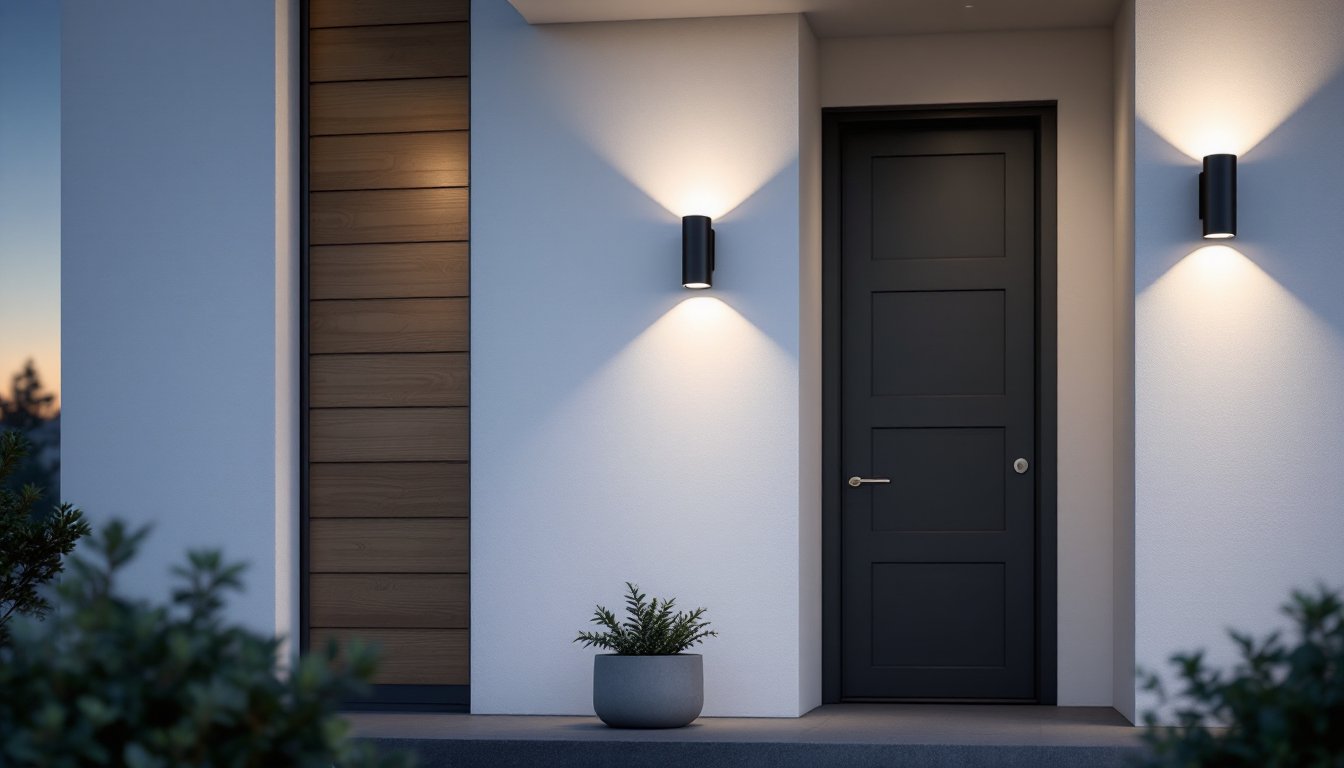
For doorway and entry lighting, 600–800 lumens provides clear visibility for unlocking doors, greeting guests, and checking packages. Wall-mounted porch lights or ceiling flush mounts in this range light a 6×6-foot area comfortably without blinding visitors.
Many security fixtures include dimming or dual-brightness modes: low output (200–400 lumens) for dusk-to-dawn operation, then full power when motion triggers. This conserves energy and reduces light pollution while keeping the area functional.
Landscape and Accent Lighting
Accent lights highlighting trees, architectural features, or specimen plants typically use 50–300 lumens, depending on the subject size and distance. A small shrub 3 feet from a 50-lumen uplight gets plenty of definition. A 20-foot oak 10 feet from the fixture needs 200–300 lumens to render texture and branching.
Well lights (in-ground canisters that shine upward) and bullet lights (adjustable stake or surface-mount spots) dominate landscape lighting. Both use narrow to medium beams (15–60 degrees) to control spill and direct attention. For grazing (angled light that accentuates texture on stone or bark), position the fixture close to the surface and use 100–200 lumens. For silhouetting (backlighting an object against a wall or fence), 150–300 lumens works, depending on the backdrop distance.
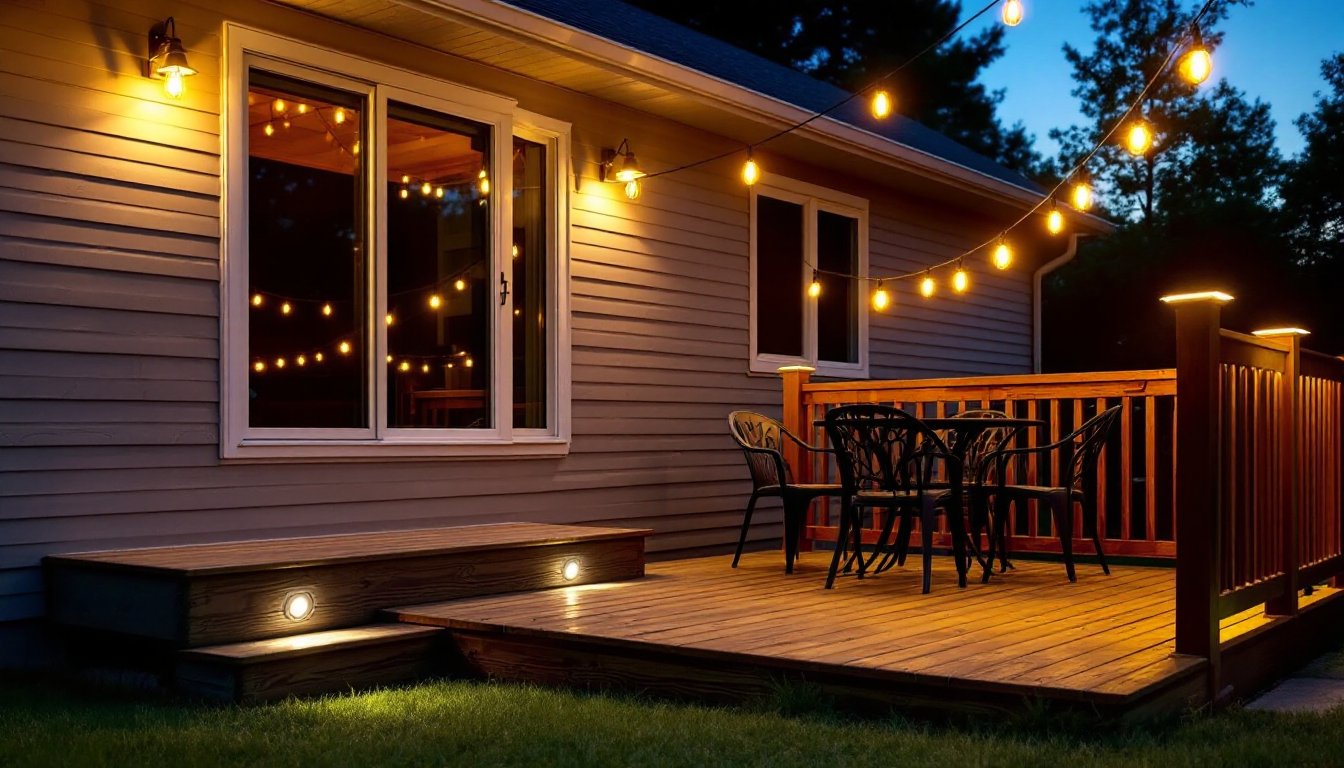
Deck and patio lighting, whether recessed into posts, mounted under rails, or clipped to pergola beams, generally needs 50–150 lumens per fixture. Too much brightness kills the evening ambiance: too little and guests can’t see their drinks. Spacing matters as much as output: fixtures every 4–6 feet along a railing maintain even illumination without hot spots.
String lights and decorative fixtures rarely list lumens, they trade task lighting for mood. If the goal is actually seeing the deck surface, supplement bistro bulbs with dedicated task fixtures.
Key Factors That Affect Lumen Requirements
Ambient light from neighboring properties, street lamps, or moonlight reduces the effective lumens needed. A pathway adjacent to a well-lit street might get by with 75–100 lumens per fixture, while the same path in a rural area with zero ambient light needs the full 150–200.
Surface color and reflectivity alter perceived brightness. Light-colored concrete, pale pavers, or white gravel bounce more light than dark mulch or black asphalt. Fixtures over reflective surfaces can use 20–30% fewer lumens and still deliver the same visibility. Conversely, lighting a dark wood deck or charcoal stone requires higher output to overcome absorption.
Mounting height and distance directly impact how much light reaches the target. A 20-foot pole light needs significantly more lumens than a 6-foot post light to illuminate the same area at ground level. The inverse square law applies: double the distance, quadruple the lumens required for equivalent brightness. Most residential outdoor fixtures mount 6–10 feet high: commercial or athletic lighting can exceed 30 feet and demand several thousand lumens per fixture.
Beam angle and optics shape coverage. A spot beam (15–30 degrees) concentrates lumens into a small, intense circle, ideal for accents or long throws. A flood beam (60–120 degrees) spreads the same lumens over a wider area, reducing intensity but improving coverage. Choosing the wrong beam angle is one of the most common DIY lighting mistakes, 500 lumens in a spot might blind someone, while 500 lumens in a wide flood barely registers.
Fixture quality and lumen maintenance matter over time. Cheap LEDs lose 30–50% of their output within a few years due to degraded drivers and phosphor coating breakdown. Quality fixtures with L70 ratings (the time it takes to drop to 70% of initial lumens) of 50,000+ hours maintain brightness far longer. Budget an extra 20% in initial lumens if using economy fixtures to account for degradation.
Local codes and dark-sky ordinances may cap lumen output, especially for security and floodlights. Some municipalities limit upward light spill, require full-cutoff fixtures, or set maximum brightness thresholds to reduce light pollution. Check local regulations before installing high-output fixtures, violations can result in fines or mandatory removal.
Conclusion
Lumens aren’t guesswork, they’re a measurable standard that takes the mystery out of outdoor lighting. Match output to function: 100–200 for pathways, 700–3,000 for security, 50–300 for accents. Factor in beam angle, mounting height, surface reflectivity, and local conditions. Start conservative, adding a fixture later is easier than living with a floodlit yard that looks like a prison exercise area.