Troy Lighting has built a reputation for producing handcrafted outdoor fixtures that balance artisan quality with practical durability. Founded with an emphasis on hand-forged metalwork and attention to architectural detail, Troy designs stand apart in a market flooded with mass-produced options. Homeowners looking to upgrade exterior lighting, whether flanking a front door, illuminating a walkway, or accenting a patio, often turn to Troy for fixtures that deliver both function and curb appeal. This guide walks through what sets Troy apart, highlights popular collections, and covers selection, installation, and maintenance considerations for DIYers ready to tackle an outdoor lighting project.
Table of Contents
ToggleKey Takeaways
- Troy outdoor lighting fixtures stand out through hand-forged construction, artisan finishing, and durable materials like solid brass and hand-forged iron that resist UV degradation and coastal corrosion.
- Proper fixture sizing and mounting height are critical—wall sconces should be one-quarter to one-third the height of the door they flank, with centers mounted 65–70 inches from the floor for optimal illumination and curb appeal.
- Troy offers both traditional collections (Stockton, Griffith, Main Street) for classic architectural styles and modern options (Corporeal, Allegany) for contemporary homes, making it easy to match fixtures to your home’s design aesthetic.
- Installation requires GFCI circuit protection, stainless steel fasteners, and proper wiring technique; heavy fixtures over 35 pounds need threaded support independent of electrical connections to ensure safety and longevity.
- LED-integrated Troy outdoor lighting models reduce maintenance but limit bulb upgrades, while traditional socket designs offer flexibility to switch between incandescent, CFL, or retrofit LED bulbs as technology evolves.
- Regular maintenance—including semi-annual cleaning, annual gasket inspections, and touch-up treatments for hand-forged iron—preserves the distinctive finishes and weatherproof ratings that define Troy’s quality.
What Makes Troy Lighting Stand Out in Outdoor Illumination
Troy Lighting differentiates itself through hand-forged construction and artisan finishing processes that give each fixture a distinct character. Unlike stamped-metal alternatives, many Troy pieces feature hammered textures, hand-applied patinas, and welded joints that mimic traditional blacksmith techniques.
Material quality is a core strength. Troy uses solid brass, hand-forged iron, and aluminum castings rated for outdoor exposure. Finishes like aged pewter, natural rust, and vintage bronze are applied in multi-step processes that resist UV degradation and coastal corrosion. For wet locations, covered porches, gazebos, or areas subject to direct rain, Troy fixtures typically carry UL wet or damp ratings, which homeowners should verify against installation site conditions.
Glass and shade options range from clear seeded glass (which shows the bulb and casts patterned light) to frosted or amber glass that softens glare. Some collections incorporate mica panels or capiz shells for a vintage aesthetic. These details matter when matching a fixture to a home’s architectural style and the intended lighting effect.
Troy also offers LED-integrated models alongside traditional socket designs. Integrated LED fixtures reduce long-term maintenance (no bulb changes for years) and deliver consistent color temperature, but they limit future bulb upgrades. Traditional sockets accept standard E26 medium-base bulbs, giving homeowners flexibility to switch between incandescent, CFL, or retrofit LED bulbs as technology and preferences evolve.
From a sizing perspective, Troy publishes exact dimensions and weight for each fixture, critical data when determining whether an existing junction box can support the load or if additional blocking is needed inside the wall. Fixtures over 50 pounds often require reinforced mounting, especially on hollow stucco or vinyl siding.
Popular Troy Outdoor Lighting Collections for Every Style
Troy organizes its product line into distinct collections, each tailored to specific architectural styles and design eras. Understanding these groupings helps narrow options before diving into technical specs.
Traditional and Vintage-Inspired Designs
The Stockton collection features lantern-style fixtures with hand-forged iron frames and clear seeded glass. The look suits Colonial Revival, Craftsman, and Tudor homes. Fixtures are available in wall sconces, pendant lights, and post-mount configurations, making it easy to coordinate across a property’s entry, garage, and walkway.
Griffith leans into rustic, Old World aesthetics with scrolled ironwork and amber-tinted glass. The textured, dark finish works well on homes with stone or brick exteriors. This collection includes oversized pendants suitable for vaulted porches or covered patios where a bold statement piece is desired.
The Main Street series offers vintage gas-lamp styling with Edison-bulb compatibility. Clear glass cylinders and exposed hardware give these fixtures an industrial edge that complements urban lofts and modern farmhouses. They’re popular for historic district renovations where period-appropriate design is encouraged by local preservation guidelines.
Modern and Contemporary Outdoor Fixtures
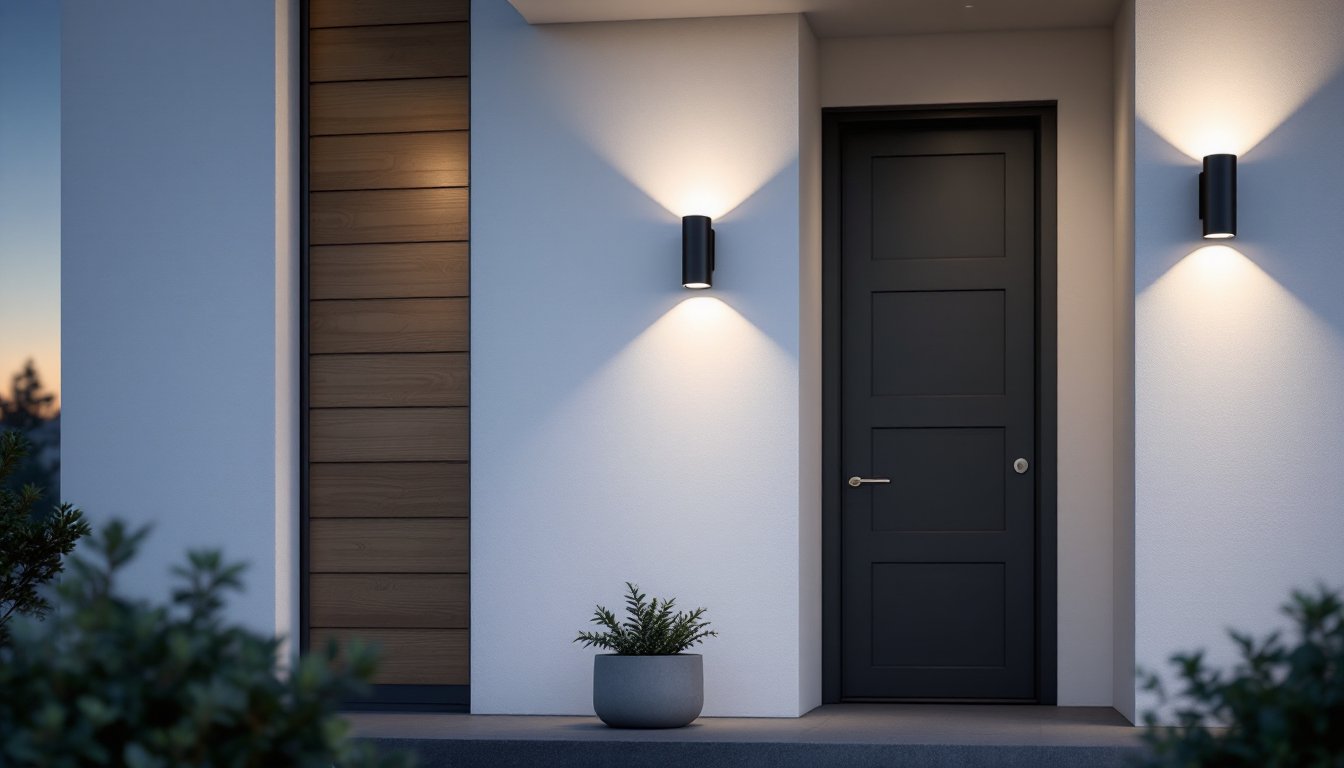
For cleaner lines and minimalist profiles, the Corporeal collection uses geometric forms and mixed materials, brushed aluminum paired with frosted acrylic diffusers. These fixtures cast even, shadowless light ideal for modern entryways and mid-century exteriors. The low-profile design also works in tight spaces where protruding lanterns would obstruct walkways.
Allegany bridges transitional style with simple, cylindrical shades and understated metal banding. Available in graphite and brushed stainless finishes, this collection suits contemporary homes without veering into stark minimalism. The straightforward mounting plates make installation easier for DIYers accustomed to replacing basic builder-grade fixtures.
Troy’s outdoor ceiling flush-mounts and semi-flush fixtures often get overlooked but solve a common problem: porch ceilings with limited clearance. Models like those in the Raleigh series mount within 6–10 inches of the ceiling, providing ample light without head-knock hazards.
Choosing the Right Troy Outdoor Lighting for Your Space
Selecting the correct fixture starts with assessing the installation location and electrical box type. Wall sconces require a standard 4-inch octagonal or round junction box mounted to a stud or solid blocking. If replacing an existing fixture, confirm the box is securely fastened and not just held by drywall anchors, outdoor fixtures experience wind load and vibration that can loosen inadequate mounts.
Fixture size and scale matter more than most DIYers anticipate. A general guideline: wall sconces should be roughly one-quarter to one-third the height of the door they flank. For an 8-foot door, that translates to fixtures in the 20–30 inch height range. Oversized lanterns can overwhelm a modest entry: undersized sconces get lost on expansive facades.
Mounting height for wall sconces typically falls between 65–70 inches from the finished floor to the center of the fixture. This positions the light source near eye level for welcoming illumination without direct glare. Pair this with the fixture’s downlight or uplight orientation, some Troy designs cast light primarily downward (better for steps and thresholds), while others diffuse in all directions.
Lumen output and bulb selection depend on the fixture’s purpose. Ambient lighting for a porch might require 800–1,100 lumens per fixture (equivalent to a 60–75W incandescent), while accent lighting along a walkway can function at 400–600 lumens. Check Troy’s recommended maximum wattage per socket and don’t exceed it, heat buildup can damage finishes and create fire hazards.
For homes in coastal or high-moisture climates, prioritize fixtures with marine-grade finishes and sealed glass panels. Even UL-rated wet-location fixtures benefit from occasional gasket checks and terminal inspections to prevent corrosion.
Color temperature influences ambiance. Warm white LEDs (2700K–3000K) suit traditional and vintage Troy collections, enhancing brass and bronze tones. Cooler whites (3500K–4000K) pair better with modern collections and stainless finishes, though some find them too clinical for residential exteriors.
Installation and Maintenance Tips for Troy Fixtures
Before starting any electrical work, shut off power at the breaker and verify with a non-contact voltage tester. Outdoor lighting circuits should be protected by a GFCI breaker or GFCI outlet, per National Electrical Code (NEC) Article 210.8. If the existing circuit lacks GFCI protection, now’s the time to upgrade.
Most Troy wall sconces mount via a crossbar bracket that attaches to the junction box with machine screws. The fixture then hangs on the crossbar, and a decorative canopy covers the box. Use stainless steel or coated screws for all exterior fasteners, standard zinc-plated screws corrode quickly outdoors. Apply a small bead of silicone caulk around the canopy perimeter after mounting to seal against water intrusion, but leave the bottom edge open for drainage (moisture needs an exit path).
When wiring, match black to black (hot), white to white (neutral), and green or bare copper to ground. Secure connections with twist-on wire connectors rated for outdoor use, and wrap each connector with electrical tape for added protection. Tuck wires neatly into the box, overstuffed boxes can pinch insulation and create shorts.
Heavy fixtures (over 35 pounds) often include a threaded nipple that screws into a hickey or reducing bushing inside the box, providing structural support independent of the electrical connections. Don’t skip this step or rely solely on the crossbar.
For post-mount or pier-mount fixtures, Troy provides a mounting template in the box. Use it to mark anchor hole locations on concrete or masonry. Drill with a hammer drill and masonry bit sized for the anchors (typically 1/4-inch or 3/8-inch). Tap in stainless steel sleeve anchors and torque bolts snugly without overtightening, which can crack the fixture base.
Maintenance is straightforward but shouldn’t be ignored. Every six months, wipe down fixtures with a soft cloth and mild soapy water, avoid abrasive cleaners that strip patina. Inspect gaskets and seals annually, especially on coastal properties. Replace any cracked or hardened gaskets to maintain the weatherproof rating. For hand-forged iron fixtures, light surface rust adds character, but deep pitting indicates the protective finish has failed: touch up with a rust-inhibiting spray formulated for metal outdoor furniture.
Bulb replacement in LED-integrated fixtures isn’t DIY-friendly, when the LED array fails (typically after 25,000–50,000 hours), the entire fixture often requires factory service or replacement. Traditional socket fixtures let you swap bulbs in under a minute, which is one reason many pros still prefer them for clients who value long-term serviceability.
Conclusion
Troy Lighting’s outdoor fixtures combine artisan craftsmanship with engineering built to withstand the elements. By understanding the brand’s material quality, matching fixture style and scale to the home’s architecture, and following solid installation practices, DIYers can achieve professional results that enhance both safety and curb appeal. Proper maintenance extends fixture life and preserves the finishes that make Troy pieces distinctive.